Toyota Embeds 200 Engineers at Joby Aviation: What It Means for Air Taxi Manufacturing
Laxman Kafle
In this article (8)▼
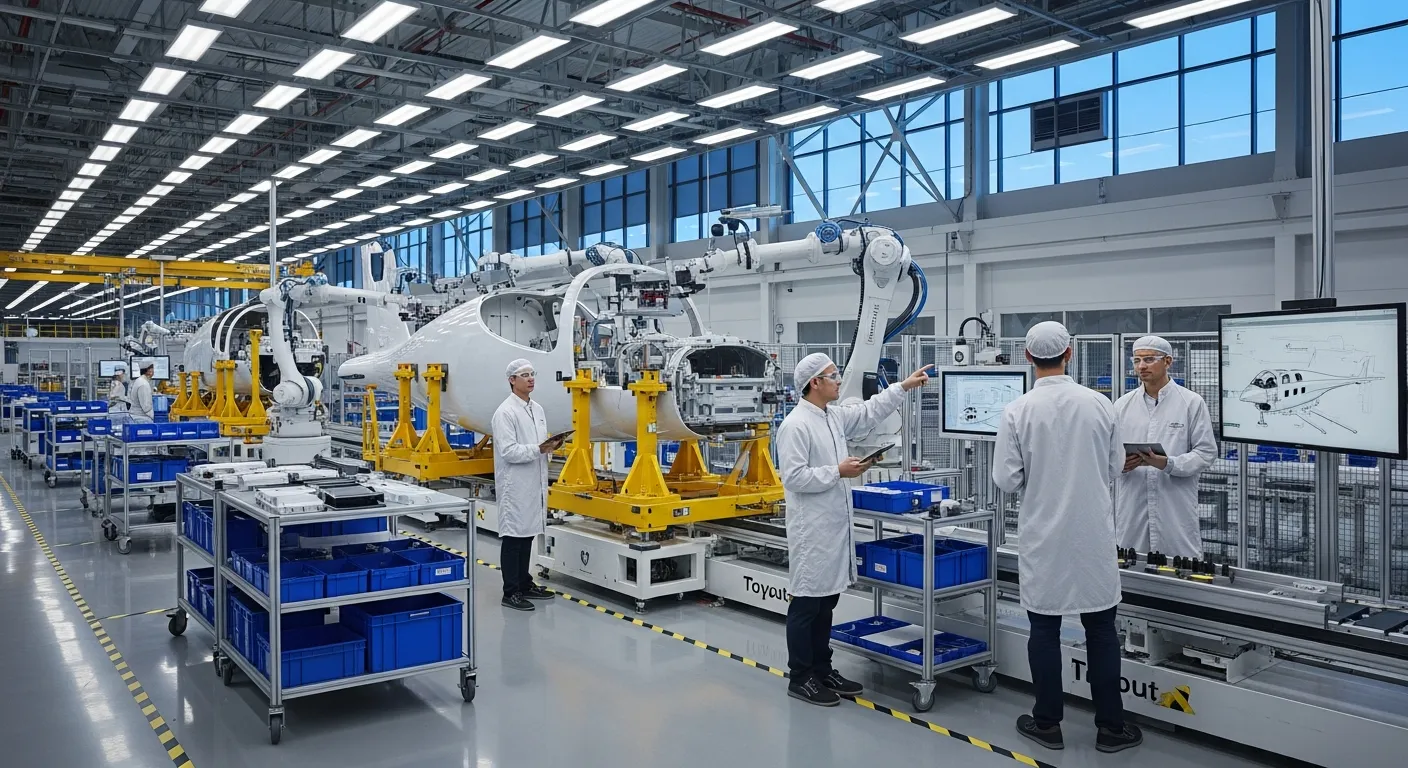
The partnership between Toyota Motor Corporation and Joby Aviation has entered a transformative new phase. Toyota, now Joby's largest shareholder with approximately $900 million invested, has deployed nearly 200 engineers directly into Joby's operations. Their mission: bring the legendary Toyota Production System (TPS) to eVTOL manufacturing.
This is not a typical corporate investment. It is an unprecedented integration of automotive manufacturing expertise into aerospace — and it could define how air taxis are built at scale.
The Toyota Production System Meets Aerospace
The Toyota Production System is widely regarded as the most successful manufacturing methodology ever developed. Its principles — just-in-time production, continuous improvement (kaizen), waste elimination (muda), and built-in quality (jidoka) — transformed global automotive manufacturing and inspired the lean manufacturing movement adopted across industries.
Now, those same principles are being applied to eVTOL aircraft production. The 200 Toyota engineers embedded at Joby are working across multiple disciplines:
- Production Line Design: Optimizing the layout and workflow of Joby's manufacturing facilities for maximum efficiency
- Quality Systems: Implementing Toyota's rigorous quality control methodologies, including statistical process control and root cause analysis
- Supply Chain Management: Applying Toyota's just-in-time supply chain principles to reduce inventory costs and improve component availability
- Tooling and Automation: Designing custom tooling and automated assembly systems tailored to eVTOL production
- Training Programs: Developing standardized training protocols for Joby's manufacturing workforce
The $900 Million Investment
Toyota's financial commitment to Joby has grown steadily since the partnership began in 2018:
- 2018-2020: Initial investments totaling approximately $400M
- 2021-2023: Additional rounds bringing cumulative investment to ~$700M
- 2024-2025: Follow-on investments reaching approximately $900M
- 2026: Toyota is now Joby's single largest shareholder
This level of investment from the world's largest automaker represents a strategic bet that eVTOL will become a significant transportation market — and that manufacturing expertise will be the critical differentiator.
Joby's $600M January 2026 Raise
In January 2026, Joby raised approximately $600 million through a combination of convertible notes and share offerings. This capital infusion serves multiple purposes:
- Factory Buildout: Funding the completion and equipping of Joby's Ohio manufacturing facility
- Certification Costs: Supporting the final stages of FAA Type Inspection Authorization (TIA) testing
- Dubai Operations: Financing the launch of commercial air taxi service in Dubai
- Working Capital: Ensuring operational runway through initial commercial ramp-up
Combined with Toyota's investment and partnerships with Delta Air Lines, United Airlines, and Uber, Joby's financial foundation is among the strongest in the eVTOL industry.
The Ohio Factory: Purpose-Built for Scale
Joby's manufacturing facility in Ohio represents the company's commitment to US-based production at scale. The factory is being designed with Toyota's direct involvement to support a production target of 4 aircraft per month by 2027.
Key features of the Ohio facility include:
- Dedicated Assembly Lines: Separate lines for fuselage, wing, propulsion, and final assembly
- Composite Manufacturing: Advanced composite layup and curing capabilities for the S4's carbon fiber airframe
- Electric Propulsion Integration: Specialized stations for motor, inverter, and battery pack installation
- Testing and Quality: In-line testing stations for systems verification before aircraft leave the factory
- Scalability: The facility is designed to expand production capacity as demand grows
The 4 aircraft per month target translates to approximately 48 aircraft per year — a significant number for a nascent industry, but modest by automotive standards. Toyota's involvement is specifically aimed at making this ramp achievable and sustainable.
Why Manufacturing Is the Real Challenge
Much of the eVTOL industry's attention has focused on certification and market development. But manufacturing may ultimately be the hardest problem to solve.
Building one aircraft is an engineering challenge. Building hundreds or thousands is a manufacturing challenge — and they require fundamentally different capabilities:
Consistency: Every production aircraft must be identical to the certified design. Even minor deviations can create safety risks and regulatory complications. Toyota's quality systems are designed to ensure this consistency at scale.
Cost Reduction: Early eVTOL aircraft will be expensive. To achieve the per-trip costs needed for mass-market air taxi service, manufacturers must drive down unit costs through learning curves, process optimization, and supply chain efficiency. This is where Toyota's decades of experience provide enormous value.
Workforce Development: eVTOL manufacturing requires workers with skills spanning aerospace, automotive, and electrical engineering. Training programs must be robust, standardized, and scalable. Toyota's training methodologies are among the most proven in global manufacturing.
Supply Chain Reliability: An aircraft sitting on the assembly line waiting for a single component is a costly problem. Toyota's just-in-time supply chain management, refined over 50+ years, directly addresses this challenge.
Competitive Implications
Toyota's deep integration with Joby creates a significant competitive moat. Consider the manufacturing strategies of Joby's main competitors:
Archer Aviation has partnered with Stellantis (formerly Fiat Chrysler) for manufacturing support, with six commercial Midnight aircraft in production at Archer's Georgia facility. Stellantis brings substantial automotive manufacturing expertise, but the partnership is less deeply integrated than Toyota-Joby.
BETA Technologies is building its own manufacturing capabilities in Burlington, Vermont, without a major automotive partner. While this preserves independence, it means BETA must develop manufacturing expertise largely from scratch.
AutoFlight and other Chinese manufacturers benefit from China's massive manufacturing infrastructure and lower labor costs, but may face challenges meeting Western quality and certification standards.
Joby's Toyota partnership gives it a manufacturing advantage that will be difficult for competitors to replicate. The combination of Toyota's $900M investment, 200 embedded engineers, and proven production methodology creates a formidable foundation for scaling.
The Bigger Picture
Toyota's bet on Joby is also a bet on the future of mobility. As the automotive industry faces disruption from electric vehicles, autonomous driving, and changing consumer preferences, Toyota sees urban air mobility as a natural extension of its transportation mission.
The deployment of 200 engineers is not charity — it is strategic positioning. If eVTOL becomes a significant market, Toyota wants to be the manufacturing backbone, just as it is for the global automotive industry.
For the eVTOL industry as a whole, Toyota's involvement validates the market opportunity and raises the bar for manufacturing excellence. It sends a signal to investors, regulators, and the public: air taxis are not a science project. They are an industrial program, backed by one of the world's most successful manufacturers.
What to Watch Next
Key milestones to monitor in the Toyota-Joby partnership:
- Q4 2025 Earnings (Feb 25, 2026): Joby's earnings call will provide updates on manufacturing progress, certification status, and Dubai launch preparations
- Ohio Factory Completion: Timeline for facility readiness and first production aircraft
- Dubai Commercial Launch: The world's first commercial eVTOL air taxi service
- Production Ramp: Progress toward the 4 aircraft/month target
Track Joby's progress and all major eVTOL developments on our companies page. Monitor eVTOL stock performance including JOBY's share price. And join our waitlist to be among the first air taxi passengers.
Sources: Information sourced from official company announcements, FAA publications, SEC filings, and verified industry reports. For corrections, contact us.
Written by
Laxman Kafle
Founder of eVTOL.Travel — building the independent global directory and verified pre-reservation platform for the urban air mobility era. Tracking every operator, vertiport, and city launch toward 2026.
Continue reading
eVTOL News July 2026: Joby's Toyota JV and Virgin Atlantic Deal, Vertical Slips to 2029, and the World Cup Verdict
July 2026 was the month the eVTOL industry's post-type-certificate era took shape. Joby — fresh off its June FAA type certificate — formed a manufacturing joint venture with Toyota and signed an exclusive UK partnership with Virgin Atlantic covering London and Manchester. Vertical Aerospace pushed VX4 certification from 2028 to 2029. BETA flew the first organ-transport relay under the FAA's eVTOL Integration Pilot Program. And the World Cup closed with the verdict we projected in April: zero commercial eVTOL flights in all 16 host cities. Here's the full roundup.
Joby Completes JFK to Manhattan Piloted Demo Flight — First US eVTOL on a Real NYC Corridor
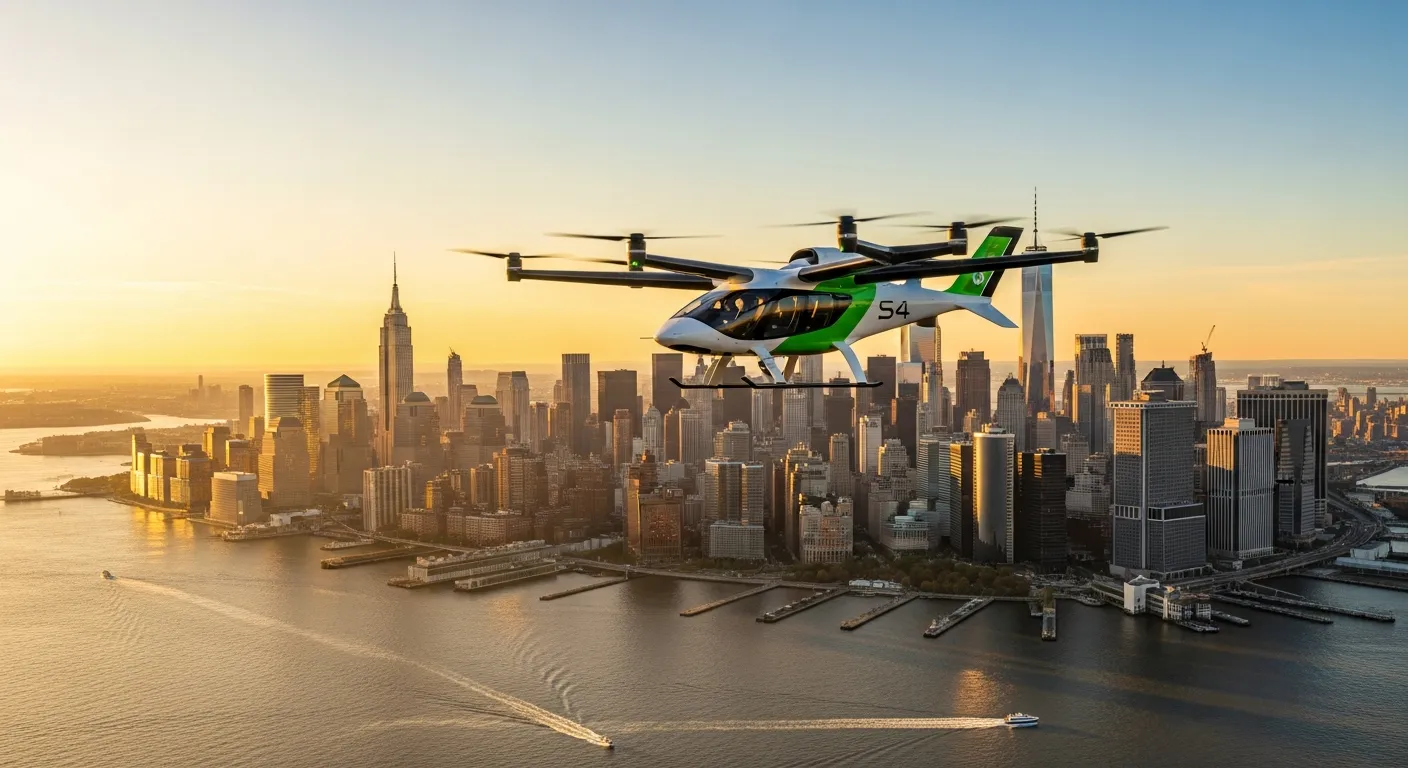
On April 27, 2026, Joby Aviation completed piloted demonstration flights of its S4 eVTOL aircraft from JFK Airport to Manhattan — the first time a US-built eVTOL has carried a pilot through congested NYC airspace on a real revenue route corridor. The flights mark New York as first in line for US commercial air taxi launch.
Texas Air Taxi: Dallas, Houston, and Austin Push State-Led Pilot Programs
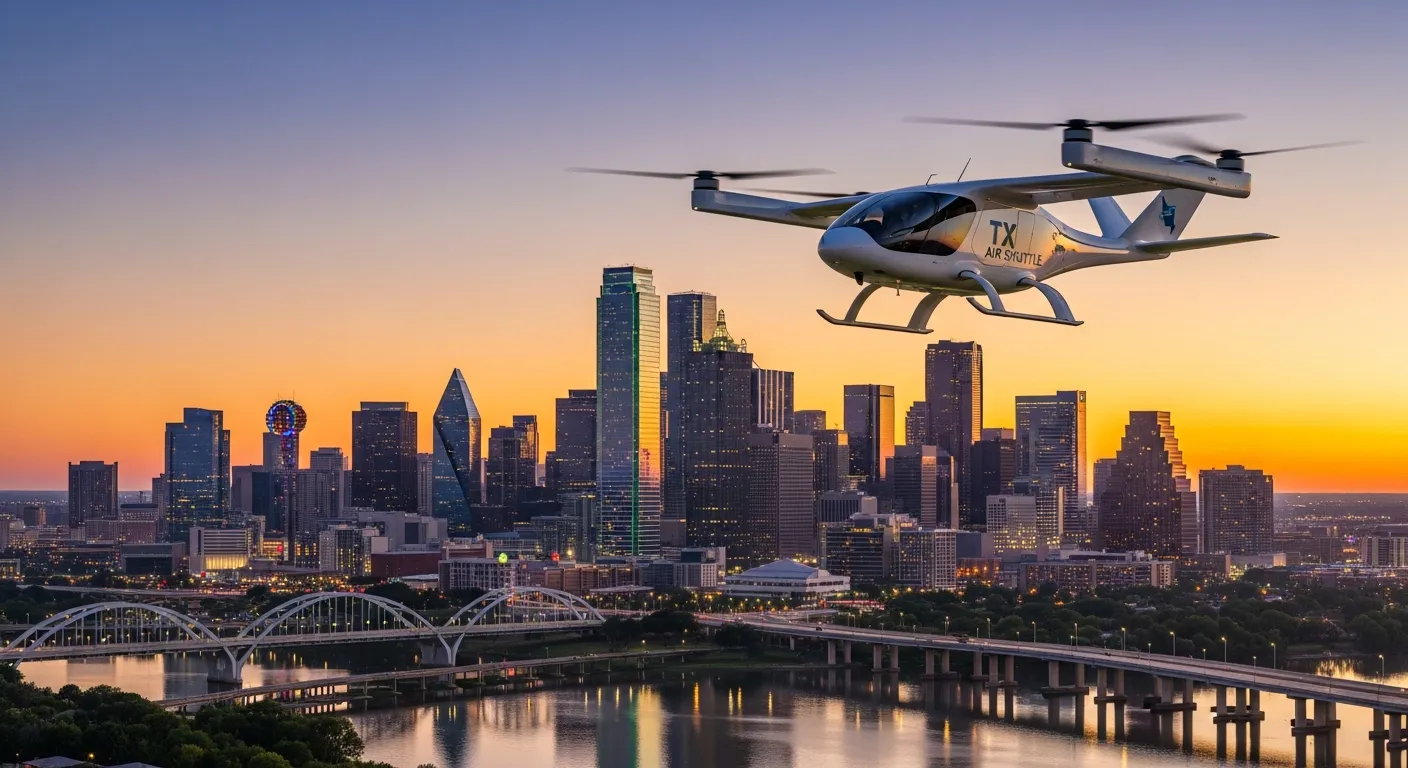
Texas is moving faster than federal coordination on eVTOL pilots. Dallas-Fort Worth, Houston, and Austin all have active state and city-level partnerships with Joby and Archer for 2026 commercial launch corridors. Here's the Texas air taxi map.
Ready to explore the future of air travel?
Discover how eVTOL technology is revolutionizing urban mobility and plan your own aerial journey.