AutoFlight Unveils World's First 5-Ton eVTOL: The Matrix Revolution
Laxman Kafle
In this article (10)▼
- Matrix Specifications: A New Category
- Size Comparison: How Matrix Stacks Up
- The Per-Seat Cost Advantage
- The Triplane Layout: Engineering Innovation
- Hybrid-Electric: Extending the Mission
- The Cargo Variant
- Implications for the Global eVTOL Market
- AutoFlight's Track Record
- What This Means for Air Taxi Passengers
- Looking Forward
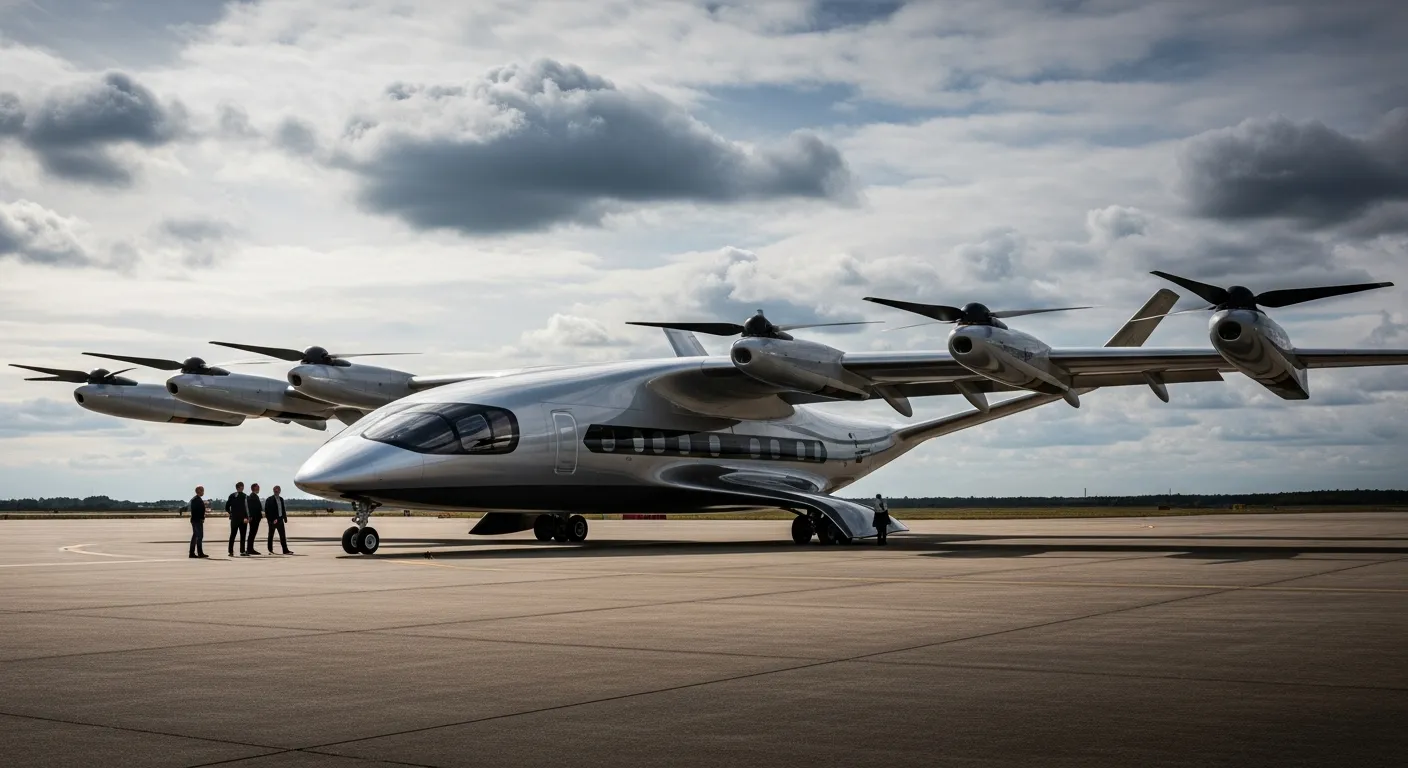
On February 5, 2026, Chinese eVTOL developer AutoFlight completed a public full-transition flight demonstration of the Matrix — the world's first 5-ton class electric vertical takeoff and landing aircraft. With a maximum takeoff weight of 5,700 kilograms and capacity for up to 10 passengers, the Matrix redefines what an eVTOL aircraft can be.
While most eVTOL developers have focused on 4-5 seat air taxis, AutoFlight has taken a dramatically different approach. The Matrix is not just bigger — it represents a fundamentally different vision for urban and regional air mobility, one built on economies of scale and per-seat cost efficiency.
Matrix Specifications: A New Category
The Matrix's confirmed specifications place it in a category entirely its own:
- Maximum Takeoff Weight: 5,700 kg (12,566 lbs)
- Passenger Capacity: Up to 10 passengers (standard) or 6 passengers (VIP configuration)
- Wingspan: 20 meters (65.6 feet)
- Length: 17.1 meters (56.1 feet)
- Cabin Length: 5.25 meters (17.2 feet)
- Amenities: Lavatories included — a first for any eVTOL
- Propulsion: 20 fifth-generation lift motors in a triplane layout with six-arm structure
- Range: 250 km pure electric / 1,500 km hybrid-electric
- Architecture: Lift-and-cruise configuration
The inclusion of lavatories is a small detail with significant implications. It signals that the Matrix is designed for routes long enough that passengers need restroom access — pushing eVTOL beyond short urban hops into genuine regional air mobility.
Size Comparison: How Matrix Stacks Up
To understand the Matrix's significance, compare it to the leading Western eVTOL programs:
| Aircraft | MTOW | Passengers | Range (Electric) |
|---|---|---|---|
| AutoFlight Matrix | 5,700 kg | 10 | 250 km |
| Joby S4 | ~2,200 kg | 4 | 241 km |
| Archer Midnight | ~3,175 kg | 4 | 161 km |
| BETA ALIA | ~3,175 kg | 5 | 400+ km |
| Eve eVTOL | ~2,800 kg | 4 | 100 km |
The Matrix is more than twice the weight of the Joby S4 and carries 2.5 times more passengers. This size advantage fundamentally changes the economics of air taxi operations.
The Per-Seat Cost Advantage
The economics of air taxis depend heavily on per-seat operating costs. This is where the Matrix's size creates a compelling advantage.
Consider a simplified comparison:
- A 4-seat eVTOL operating at 75% load factor carries 3 revenue passengers per flight
- A 10-seat Matrix operating at 75% load factor carries 7.5 revenue passengers per flight
Even if the Matrix costs more to operate per flight than a smaller aircraft, the cost is spread across 2.5 times more passengers. Fixed costs like pilot salary, landing fees, and maintenance overhead are amortized more efficiently.
AutoFlight estimates that the Matrix could achieve per-seat costs 40-50% lower than competing 4-5 seat eVTOLs. If validated, this cost advantage could make the Matrix the preferred platform for high-demand routes where passenger volume justifies larger aircraft.
The Triplane Layout: Engineering Innovation
The Matrix's distinctive triplane layout — three vertically stacked wing surfaces — is an unusual choice in modern aviation but offers specific advantages for a large eVTOL:
- Compact Footprint: Three smaller wings produce the same total lift as a single larger wing, allowing the Matrix to operate from vertiports designed for smaller aircraft
- Structural Efficiency: The triplane structure distributes loads across the airframe more evenly
- Motor Integration: The six-arm structure supporting 20 lift motors provides ample space for the distributed electric propulsion system
- Transition Flexibility: The lift-and-cruise architecture allows the Matrix to use dedicated lift motors for vertical flight and wing-mounted propulsion for efficient cruise
Hybrid-Electric: Extending the Mission
While the Matrix offers 250 km of pure-electric range, its hybrid-electric configuration extends range to 1,500 km. This capability opens entirely new mission profiles:
- Regional Routes: City-to-city flights of 500+ km become feasible, competing with regional airlines and high-speed rail
- Cargo Operations: Heavy-lift capability combined with long range makes the Matrix viable for cargo logistics
- Emergency Services: Extended range and high payload capacity suit medical evacuation and disaster response
- Military Applications: The Matrix's performance envelope overlaps with military transport requirements
The Cargo Variant
AutoFlight is also developing a cargo variant of the Matrix. With 5,700 kg MTOW and generous cabin dimensions, the cargo Matrix could carry substantial payloads for:
- E-commerce logistics: Same-day delivery between distribution centers
- Medical supply transport: Time-critical pharmaceutical and organ deliveries
- Industrial cargo: Parts and equipment for remote or congested locations
- Humanitarian operations: Disaster relief supply delivery
The cargo market may prove to be the Matrix's most immediate commercial opportunity, as cargo operations face fewer regulatory hurdles than passenger service and do not require the same level of public trust-building.
Implications for the Global eVTOL Market
The Matrix challenges several assumptions that have dominated the eVTOL industry:
Bigger Can Be Better: The industry consensus has been that smaller, simpler aircraft will reach market first. AutoFlight demonstrates that larger aircraft are technically feasible and may be economically superior for certain applications.
China's Ambition: The Matrix is the most ambitious eVTOL design yet unveiled by a Chinese company, surpassing even EHang's pioneering autonomous aircraft. It signals that Chinese manufacturers are not content to follow Western design paradigms — they are creating new ones.
Market Segmentation: The eVTOL market is not monolithic. There will be demand for small 2-4 seat aircraft for short urban hops, and for larger aircraft like the Matrix for longer regional routes. The market will likely segment similarly to how helicopters range from light singles to heavy transports.
Certification Challenges: Certifying a 5,700 kg eVTOL presents unique challenges. The aircraft's size and complexity exceed the frameworks currently being developed for smaller eVTOLs. AutoFlight will need to work closely with regulators to establish appropriate certification pathways, potentially pursuing EASA certification for European market access.
AutoFlight's Track Record
AutoFlight is not a newcomer. The company has built credibility through a series of achievements:
- Prosperity I: Their earlier aircraft set a 250 km range record for eVTOLs
- Flight Testing: Extensive flight test program including fully autonomous operations
- Technology: Proven lift-and-cruise architecture refined over multiple generations
- Global Ambitions: Pursuing certification in both China and Europe
The Matrix builds on this foundation, representing AutoFlight's most ambitious aircraft to date.
What This Means for Air Taxi Passengers
For future passengers, the Matrix offers a fundamentally different air taxi experience:
- More Spacious: The 5.25m cabin provides room comparable to a business aircraft
- More Comfortable: Amenities like lavatories make longer flights practical
- More Affordable: Lower per-seat costs could translate to more accessible ticket prices
- More Versatile: The Matrix can serve routes that smaller eVTOLs cannot reach
Looking Forward
AutoFlight will need to navigate several challenges to bring the Matrix to market:
- Certification: Securing type certification from CAAC and potentially EASA
- Manufacturing: Scaling production of a much larger and more complex aircraft
- Infrastructure: Developing vertiport facilities capable of handling 5,700 kg aircraft
- Market Development: Building route networks and partnerships for Matrix operations
Despite these challenges, the Matrix represents a bold bet on the future of air mobility — one where bigger, more capable aircraft serve not just as urban taxis but as a genuine alternative to regional aviation.
Explore all eVTOL aircraft and their specifications on our eVTOL aircraft page. Compare companies across the industry, and join our waitlist to be among the first to experience air taxi travel.
Sources: Information sourced from official company announcements, FAA publications, SEC filings, and verified industry reports. For corrections, contact us.
Written by
Laxman Kafle
Founder of eVTOL.Travel — building the independent global directory and verified pre-reservation platform for the urban air mobility era. Tracking every operator, vertiport, and city launch toward 2026.
Continue reading
China Is Winning the eVTOL Race: Inside the May 2026 News Surge from EHang, AutoFlight & Inflync
Five things matter about China's eVTOL surge right now: paying passengers in Guangzhou, a working Shenzhen–Hong Kong cross-border route, all four CAAC certifications on the EH216-S, AutoFlight's expanding Prosperity I production, and a regulatory machine that is moving faster than the FAA or EASA. Here is the May 2026 roundup.
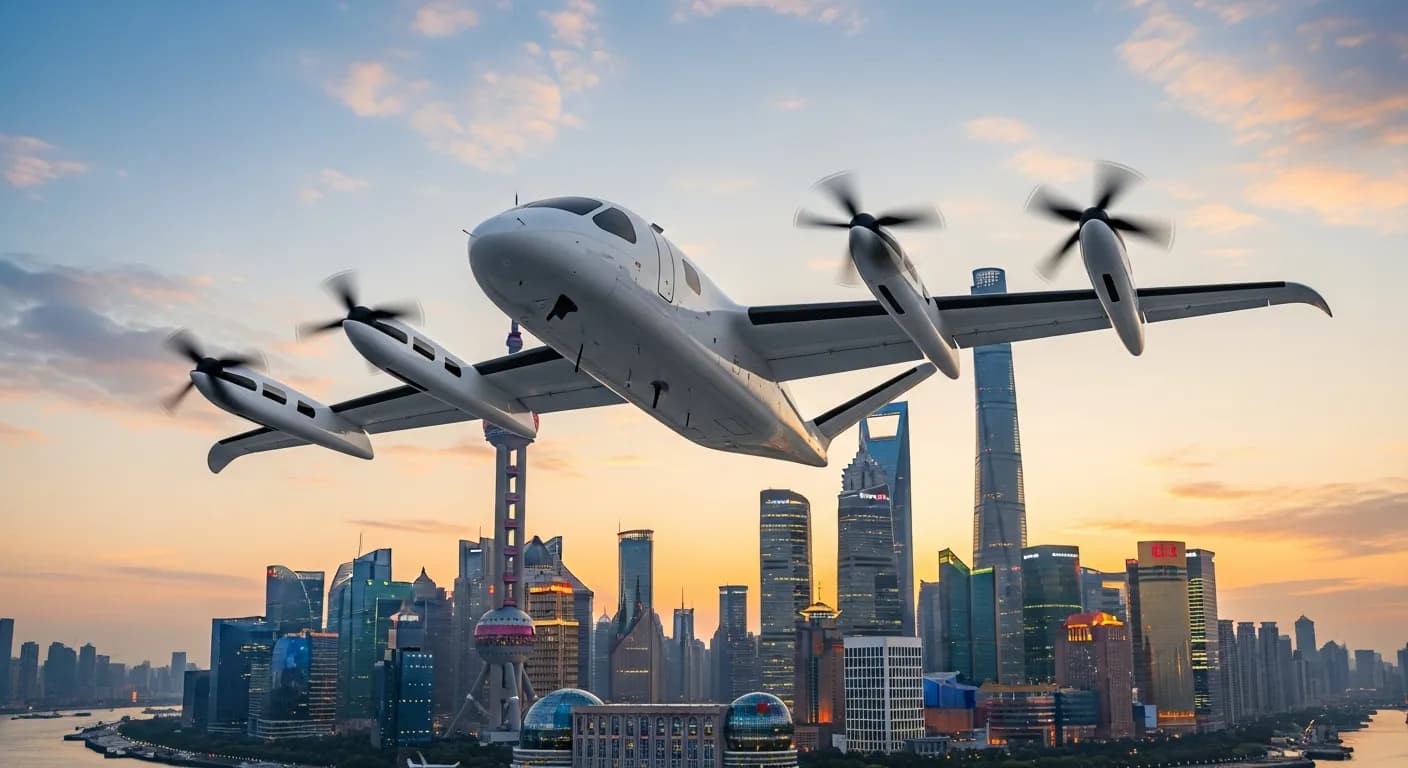
China's Inflync Achieves Full-Scale eVTOL Flight in Record 2.5 Years
Inflync, founded in October 2023 in Shanghai, completed the first untethered hover flight of its full-scale L600 ducted-fan eVTOL on February 15, 2026. The 20-ducted-fan aircraft features 600km range and 360 km/h cruise speed — just 2.5 years after founding.
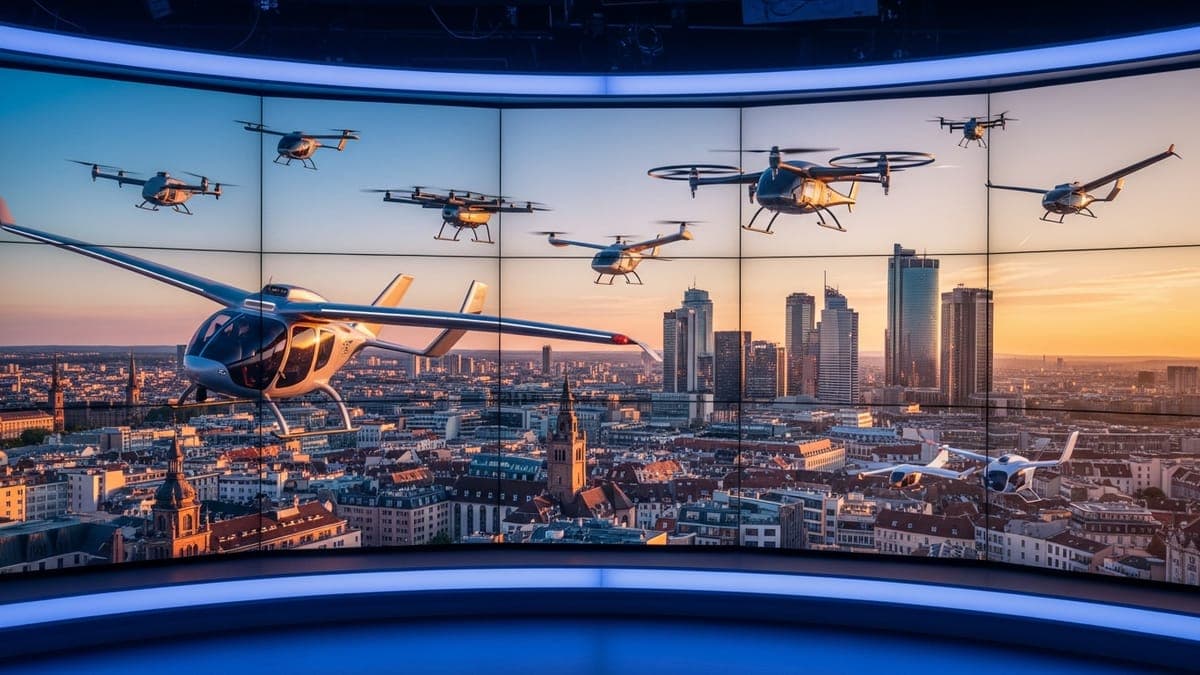
DW News on eVTOLs: What They Got Right (and the Two Corrections Worth Making)
DW News dropped a tight 2026 eVTOL explainer covering AutoFlight's 10-passenger Matrix, Joby's Dubai 2026 launch, Archer's LA 2028 Olympics deal, and Vertical Aerospace's VX4. The headline timing — 3 years for something more viable, 5–10 years for full-scale rollout — is broadly right. Two factual points are worth correcting for travelers: AutoFlight Matrix is a prototype with no published Chinese type-cert pathway yet, and commercial passenger eVTOL service actually exists today in Guangzhou and Shenzhen on EHang's EH216-S. Here's the line-by-line read.
Ready to explore the future of air travel?
Discover how eVTOL technology is revolutionizing urban mobility and plan your own aerial journey.