What Are eVTOLs? The Definitive 2026 Guide to Electric Air Taxis
Laxman Kafle
In this article (12)▼
- What Does eVTOL Stand For?
- How Do eVTOLs Work?
- Key Specifications Comparison (2026)
- Who Is Building eVTOLs?
- When Can You Fly an eVTOL?
- How Much Will eVTOL Flights Cost?
- Are eVTOLs Safe?
- Where Will eVTOLs Fly?
- eVTOLs vs. Helicopters
- The Bigger Picture: Urban Air Mobility
- What Challenges Remain?
- How to Get Involved
Last updated April 30, 2026 — major industry milestones since first publish: Joby completed its first piloted flight from Manhattan's Downtown Heliport (April 2026), Joby reached FAA Stage 4 TIA (April 2026), Archer's Abu Dhabi launch slipped to Q3 2026 with FAA Means-of-Compliance signed, BETA Technologies completed its $7B IPO (Nov 2025), and the FAA finalized Part 194 Powered-Lift rules. This guide reflects all of those changes.
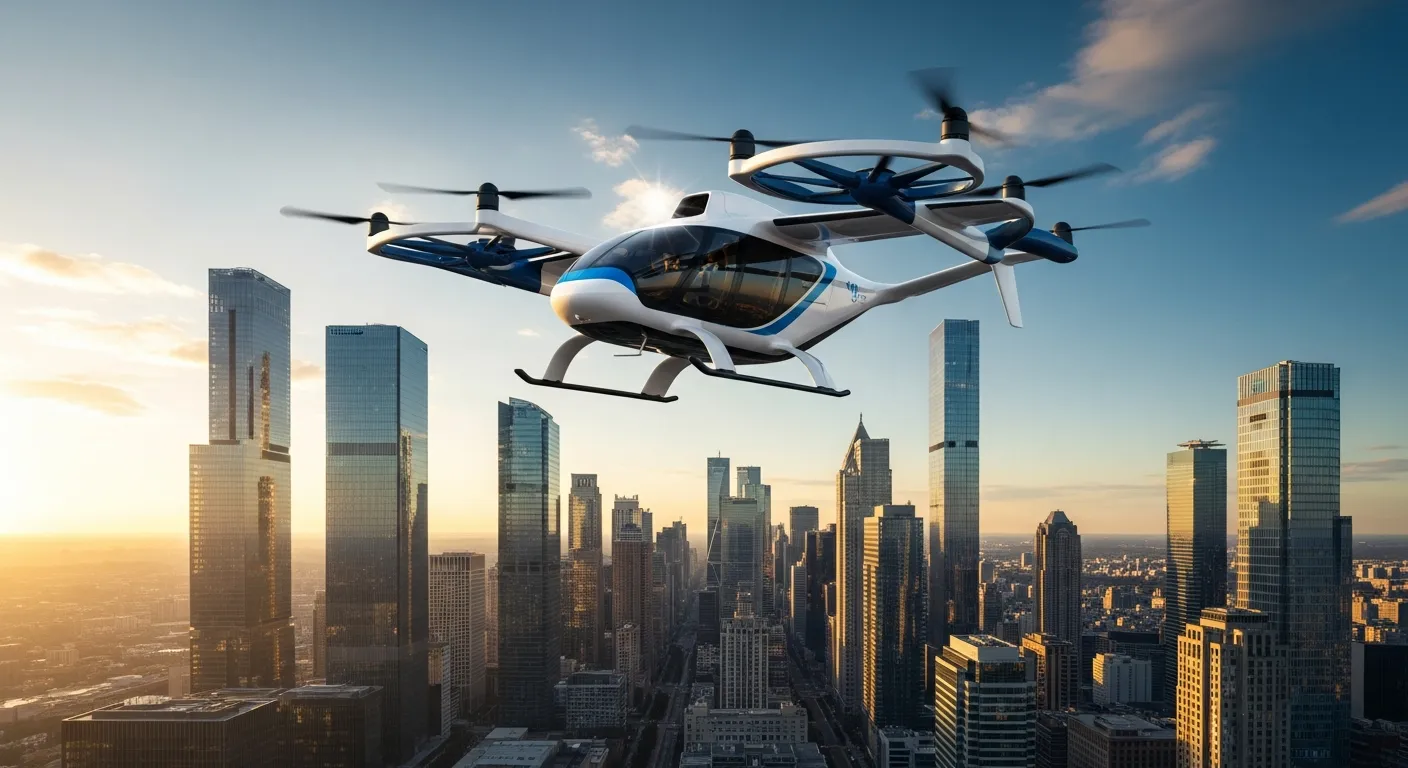
The age of flying taxis is no longer science fiction. In 2026, electric Vertical Take-Off and Landing aircraft — eVTOLs — are transitioning from test flights to commercial passenger service. With over 1,000 eVTOL concepts worldwide and the first paying passengers already flying with EHang in China and the first US-spec passenger flights expected this year, this is the most comprehensive guide to understanding what eVTOLs are, how they work, and why they matter.
What Does eVTOL Stand For?
eVTOL stands for electric Vertical Take-Off and Landing. These are aircraft that:
- Take off and land vertically — like a helicopter, requiring no runway
- Run on electric power — using battery-electric or hybrid-electric propulsion
- Fly quietly — typically 45-65 dB, far quieter than helicopters (80-100 dB)
- Are designed for urban mobility — short to medium-range trips within and between cities
Think of them as electric helicopters reimagined for everyday passengers — safer, quieter, cleaner, and eventually more affordable.
How Do eVTOLs Work?
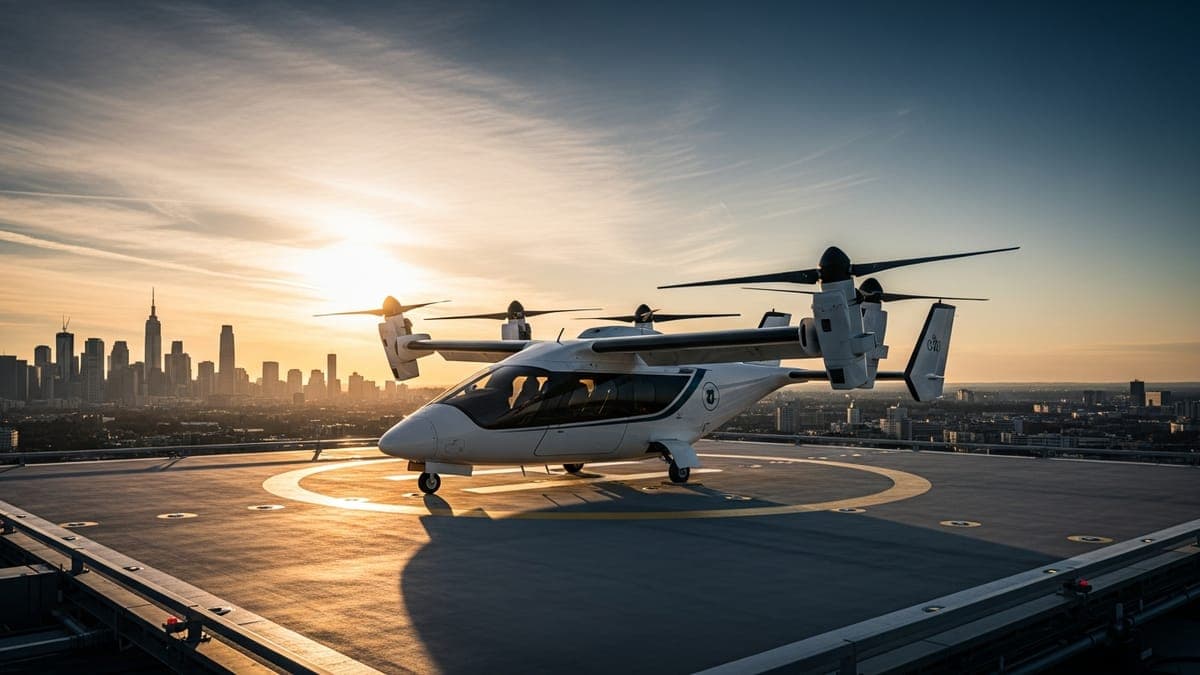
eVTOLs use multiple electric motors driving rotors or propellers for vertical lift. Most designs fall into three categories:
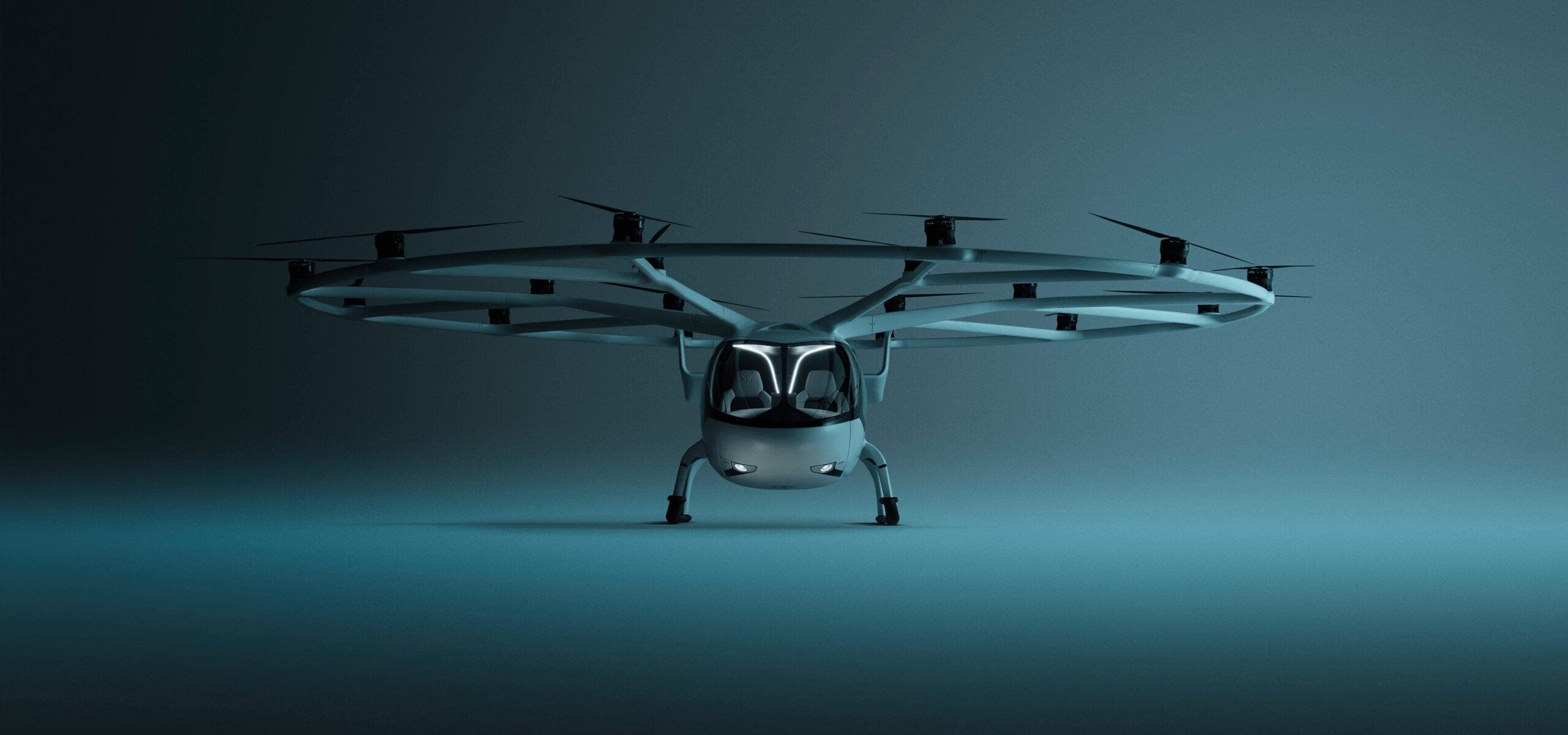
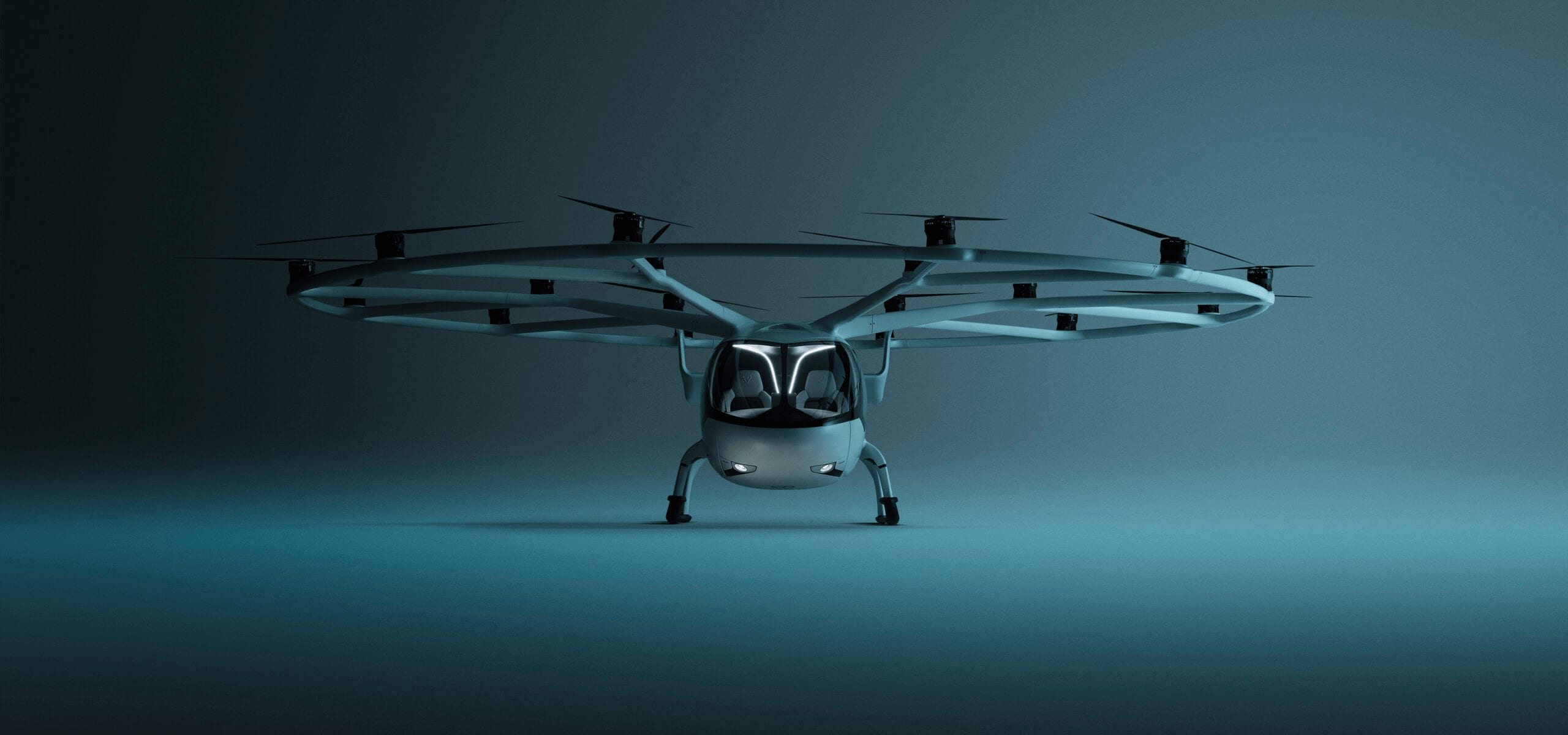
Multirotor — Similar to large drones with fixed rotors. Simple and reliable, but limited range. - Example: EHang EH216-S (autonomous, certified in China)
Lift + Cruise — Separate rotors for vertical lift and forward flight. Rotors tilt or shut off once airborne. - Example: Archer Midnight (4 passengers + pilot, 100-mile range)
Tilt-Rotor / Tilt-Wing — Rotors or wings physically tilt from vertical to horizontal, combining helicopter-like takeoff with airplane-like cruise efficiency. - Example: Joby S4 (5 passengers, 150-mile range, 200 mph)
During takeoff, all rotors generate vertical lift. Once at cruising altitude (typically 1,000-4,000 feet), the aircraft transitions to wing-borne flight, dramatically improving efficiency and range.
Key Specifications Comparison (2026)
| Aircraft | Passengers | Range | Speed | Status |
|---|---|---|---|---|
| Joby S4 | 4+1 pilot | 150 mi | 200 mph | FAA Stage 4, Dubai Q3 2026 |
| Archer Midnight | 4+1 pilot | 100 mi | 150 mph | FAA certification in progress, Abu Dhabi 2026 |
| EHang EH216-S | 2 | 22 mi | 80 mph | Certified & operating in China |
| Vertical Aerospace VX4 | 4+1 pilot | 100+ mi | 200 mph | Transition flight Q1 2026 |
| Eve eVTOL | 4+1 pilot | 60 mi | 150 mph | Full-scale first flight completed Feb 2026 |
| AutoFlight Matrix | 10 | 250 mi | 186 mph | 5-ton class demo Feb 2026 |
Who Is Building eVTOLs?
The industry has consolidated significantly. After Volocopter and the original Lilium ceased operations, and Supernal paused development, the field has narrowed to serious contenders with real certification progress:
Leading the Pack: - Joby Aviation — The furthest along in FAA certification (Stage 4 of 5). Toyota has committed ~$1 billion as their largest shareholder. Over 850 test flights in 2025. Dubai commercial launch planned Q3 2026, with US service targeted for late 2026. - Archer Aviation — $2B+ liquidity buffer, Georgia manufacturing facility operational, Abu Dhabi 2026 launch with Midnight aircraft. Miami, NYC, LA, and SF networks planned. - EHang — Already operating commercially in China with the world's first certified autonomous eVTOL. Over 50,000 demo flights completed.
Strong Contenders: - BETA Technologies — IPO completed November 2025. Focused on cargo and medical logistics rather than urban air taxis. Capital-efficient approach. - Eve Air Mobility — Backed by Embraer's 50+ years of aerospace expertise. Completed full-scale prototype first flight in early 2026. Six conforming prototypes planned. - Vertical Aerospace — UK-based, targeting New York routes. Critical transition flight test expected Q1 2026. - AutoFlight — Chinese manufacturer that demonstrated the world's first 5-ton eVTOL (Matrix) in February 2026 — 10 passengers, 250 km electric range, 1,500 km hybrid range.
Infrastructure Players: - Ferrovial Vertiports — Building the physical takeoff/landing infrastructure - Skyportz — Australia-based vertiport developer - Blade Air Mobility — Already operating helicopter routes that will convert to eVTOL
The eVTOL industry has matured from over 800 startups to roughly a dozen serious programs — those with real certification progress, real manufacturing, and real launch customers.
When Can You Fly an eVTOL?
Here's the realistic 2026-2028 timeline based on confirmed programs and regulatory progress:
2026 — First Commercial Flights: - Q3 2026: Joby launches in Dubai — first commercial air taxi service - 2026: Archer begins Abu Dhabi operations - Summer 2026: FAA eVTOL Integration Pilot Program (eIPP) begins in the US (at least 5 projects, initially without paying passengers) - 2026: SkyDrive demonstrations at Osaka Expo in Japan
2027 — Expansion: - First US commercial passenger flights (Joby, Archer) - Archer targeting 2028 LA Olympics with full network - European operations via EASA certification paths - Joby scaling to 4 aircraft/month production
2028-2030 — Scaling: - Archer targeting 650 aircraft/year production - Autonomous flight capabilities (removing pilot, reducing costs) - Network effects with multiple vertiport locations per city
How Much Will eVTOL Flights Cost?
Initial pricing is expected at $5-8 per mile — comparable to Uber Black or a premium ride-hail. A 30-mile airport-to-downtown trip would cost approximately $150-240.
As the technology scales and autonomous operations begin, the target is to reach UberX-level pricing ($2-3 per mile), making air taxis competitive with ground transportation for medium-distance urban trips.
For detailed pricing analysis, see our eVTOL Price Guide and Air Taxi Cost breakdown.
Are eVTOLs Safe?
Safety is the single most important factor in eVTOL certification. Key safety features include:
- Redundant motors — Most designs have 6-12+ independent motors. If several fail, the aircraft can still land safely
- Distributed Electric Propulsion (DEP) — No single point of failure, unlike helicopter single-engine designs
- Ballistic parachute systems — Whole-aircraft recovery parachutes as a backup
- Fly-by-wire controls — Computer-assisted flight that prevents dangerous maneuvers
- Battery management — Advanced thermal management and cell-level monitoring
- FAA/EASA certification — The same rigorous safety standards applied to commercial airliners
The FAA requires eVTOLs to meet a failure rate of less than one catastrophic failure per billion flight hours — the same standard as commercial aviation. For more detail, see our Air Taxi Safety Guide.
Where Will eVTOLs Fly?
Initial routes will connect:
- Airports to city centers — The highest-demand use case (e.g., JFK to Manhattan, Dubai Airport to downtown)
- City-to-city corridors — Short regional routes (e.g., LA to San Diego, Miami to West Palm Beach)
- Tourist destinations — Scenic and resort connections
These flights depart and arrive at vertiports — purpose-built landing pads with charging infrastructure. Our Vertiport Database tracks 98 planned, under-construction, and operational vertiport locations globally, including confirmed 2026 launch sites in Dubai, Abu Dhabi, Japan, Florida, and South Korea.
eVTOLs vs. Helicopters
| Feature | eVTOL | Helicopter |
|---|---|---|
| Noise | 45-65 dB (conversation level) | 80-100 dB (requires hearing protection) |
| Emissions | Zero (battery electric) | High (jet fuel) |
| Operating Cost | ~$1-2/mile (projected at scale) | $8-15/mile |
| Safety | Redundant motors, no single point of failure | Single engine, complex mechanics |
| Maintenance | Fewer moving parts, lower cost | High maintenance, frequent inspections |
| Pilot Requirement | Initially yes, autonomous capability planned | Always requires pilot |
For a full comparison, see eVTOL vs Helicopter.
The Bigger Picture: Urban Air Mobility
eVTOLs are the cornerstone of a broader transformation called Urban Air Mobility (UAM) or Advanced Air Mobility (AAM). This includes:
- Air taxi networks within cities
- Regional air mobility connecting smaller cities
- Cargo and medical delivery by drone and eVTOL
- Emergency response applications
The global UAM market is projected to reach $87.6 billion by 2026 (37.2% CAGR) and could exceed $1 trillion by 2040. For a complete industry overview, see our Urban Air Mobility deep dive.
What Challenges Remain?
Despite enormous progress, several challenges remain:
- FAA certification pace — The Aviation Innovation and Global Competitiveness Act (S.3866) introduced February 2026 aims to set 270-day FAA response targets
- Battery energy density — Current lithium-ion batteries limit range; new lithium-sulfur technology (400 Wh/kg) is promising
- Infrastructure buildout — Vertiports need to be built, permitted, and connected to the grid
- Public acceptance — Noise concerns, safety perception, and NIMBY opposition
- Capital requirements — Pre-revenue companies burning $100-175M+ per quarter
How to Get Involved
Whether you're a potential passenger, investor, or industry professional, there are ways to engage now:
- Join the Waitlist — Reserve your position for the first commercial eVTOL flights
- Explore Routes — See planned air taxi routes in your city
- Operator Dashboard — For industry professionals tracking demand signals
- eVTOL Stocks — Investment analysis of publicly traded eVTOL companies
- Career Guide — How to become an eVTOL pilot
Last updated: February 18, 2026. This article is regularly updated with the latest industry developments, certification milestones, and commercial launch timelines. Sources include FAA publications, SEC filings, official company announcements, and verified industry reports.
Sources: Information sourced from official company announcements, FAA publications, SEC filings, and verified industry reports. For corrections, contact us.
Written by
Laxman Kafle
Founder of eVTOL.Travel — building the independent global directory and verified pre-reservation platform for the urban air mobility era. Tracking every operator, vertiport, and city launch toward 2026.
Continue reading
Flying Cars Are Here: The 2026 Guide to Real Flying Cars You Can Ride
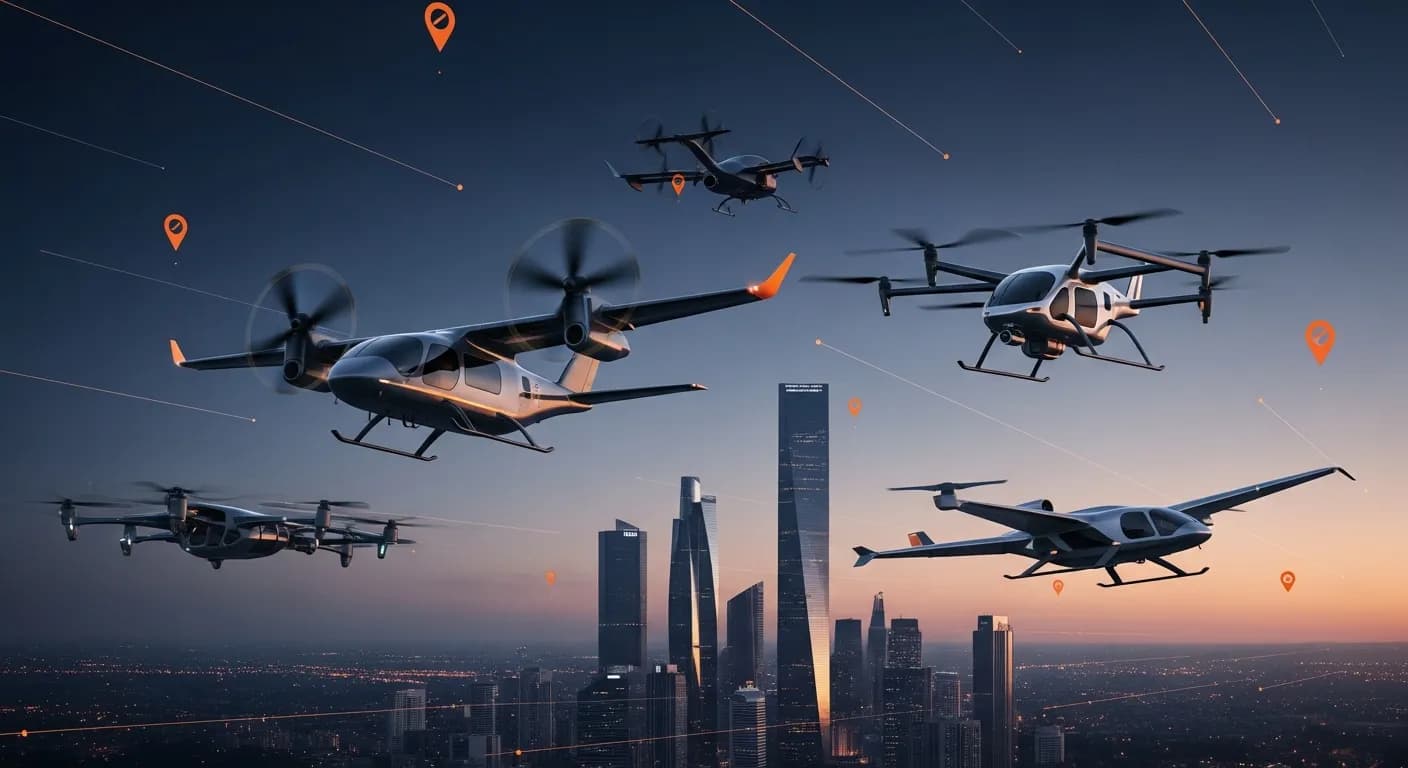
Flying cars are no longer science fiction. In 2026, real electric flying vehicles are carrying paying passengers in Dubai and China, with US and European cities next. This is the definitive guide to what flying cars actually are, who makes them, where you can ride one, and what it costs.
eVTOL News July 2026: Joby's Toyota JV and Virgin Atlantic Deal, Vertical Slips to 2029, and the World Cup Verdict
July 2026 was the month the eVTOL industry's post-type-certificate era took shape. Joby — fresh off its June FAA type certificate — formed a manufacturing joint venture with Toyota and signed an exclusive UK partnership with Virgin Atlantic covering London and Manchester. Vertical Aerospace pushed VX4 certification from 2028 to 2029. BETA flew the first organ-transport relay under the FAA's eVTOL Integration Pilot Program. And the World Cup closed with the verdict we projected in April: zero commercial eVTOL flights in all 16 host cities. Here's the full roundup.

DW News on eVTOLs: What They Got Right (and the Two Corrections Worth Making)
DW News dropped a tight 2026 eVTOL explainer covering AutoFlight's 10-passenger Matrix, Joby's Dubai 2026 launch, Archer's LA 2028 Olympics deal, and Vertical Aerospace's VX4. The headline timing — 3 years for something more viable, 5–10 years for full-scale rollout — is broadly right. Two factual points are worth correcting for travelers: AutoFlight Matrix is a prototype with no published Chinese type-cert pathway yet, and commercial passenger eVTOL service actually exists today in Guangzhou and Shenzhen on EHang's EH216-S. Here's the line-by-line read.
Ready to explore the future of air travel?
Discover how eVTOL technology is revolutionizing urban mobility and plan your own aerial journey.