Congress Introduces Bipartisan Bill to Accelerate eVTOL Certification
Laxman Kafle
In this article (7)▼
In a landmark move for the advanced air mobility industry, Congress introduced the Aviation Innovation and Global Competitiveness Act on February 16, 2026. This bipartisan legislation targets one of the biggest bottlenecks facing the eVTOL sector: the pace of FAA certification.
The bill arrives at a critical inflection point. Multiple eVTOL companies are in advanced stages of certification, yet regulatory delays have consistently pushed back commercial launch timelines. This legislation signals that Washington is finally treating urban air mobility as a national competitiveness priority — not just a futuristic curiosity.
What the Bill Proposes
The Aviation Innovation and Global Competitiveness Act introduces several key provisions designed to streamline the FAA's certification process:
- 270-Day Response Targets: The FAA would be required to respond to certification submissions within 270 days, creating accountability and predictability for manufacturers
- Dedicated Certification Resources: The bill allocates additional funding and staffing for the FAA's Aircraft Certification Service, specifically for powered-lift and eVTOL applications
- Standardized Type Certification Criteria: Establishes clear benchmarks for what constitutes a complete certification application, reducing back-and-forth between manufacturers and the FAA
- International Harmonization Mandate: Directs the FAA to work with EASA, CAAC, and other international regulators to develop reciprocal certification agreements
- Annual Progress Reporting: Requires the FAA to publish annual reports on certification pipeline status, processing times, and resource allocation
Why This Matters Now
The timing of this legislation is no accident. The United States is locked in an increasingly visible race with China over eVTOL leadership. Chinese manufacturers like EHang have already achieved type certification and begun commercial operations, while companies like Inflync are reaching full-scale flight milestones at unprecedented speed.
Meanwhile, leading American developers have invested billions of dollars and years of engineering effort, only to face unpredictable regulatory timelines. The certification process, while essential for safety, has become a competitive disadvantage when measured against the pace of Chinese regulators.
Impact on Major eVTOL Programs
The bill could have transformative effects on the certification timelines of several key programs:
Joby Aviation is currently in Type Inspection Authorization (TIA) testing — the final FAA certification stage. With over 850 flights in 2025 and a Dubai commercial launch planned for 2026, Joby stands to benefit enormously from accelerated FAA processing. Faster US certification would complement their five-nation regulatory roadmap spanning the USA, UK, Australia, Canada, and New Zealand.
Archer Aviation has completed over 400 test flights and is building six commercial Midnight aircraft at its Georgia facility. The company is awaiting FAA eIPP program selections expected in early-to-mid 2026. A more predictable certification timeline would bolster investor confidence and help Archer execute on its $6B+ order backlog.
Wisk Aero, Boeing's autonomous eVTOL subsidiary, faces the additional complexity of certifying an aircraft without an onboard pilot. The bill's provisions for standardized criteria could be especially beneficial for novel certification categories like autonomous passenger aircraft.
BETA Technologies, which went public via IPO in November 2025, is targeting cargo and medical logistics operations first. The 270-day response mandate would provide the timeline certainty that public market investors demand.
The Global Competitiveness Angle
The bill's title — "Global Competitiveness" — is deliberate. Congress is signaling awareness that eVTOL is not just a transportation issue but an economic and strategic one.
Consider the stakes:
- The global eVTOL market is projected to reach $30 billion by 2035
- An estimated 280,000 jobs could be created in manufacturing, operations, and infrastructure
- First-mover advantage in certification could determine which nation's companies dominate global air taxi networks
- Military applications of eVTOL technology carry significant defense implications
China's approach — centralized regulatory authority with aggressive timelines — has already produced certified, commercially operating aircraft. Europe's EASA has established dedicated eVTOL certification pathways. The United States, despite having the most advanced aircraft programs, has risked falling behind on the regulatory front.
Industry Reaction
Industry response has been overwhelmingly positive. The Vertical Flight Society called the bill "the most significant legislative support for advanced air mobility in a decade." Major OEMs and their airline partners — including Delta Air Lines, United Airlines, and Japan Airlines — have publicly endorsed the legislation.
However, some aviation safety advocates urge caution. The Air Line Pilots Association (ALPA) emphasized that "certification timelines should be driven by safety evidence, not arbitrary deadlines." The bill's sponsors have stressed that the 270-day targets are for FAA responses, not for certification outcomes — safety standards remain unchanged.
What Happens Next
The bill has been referred to the House Transportation and Infrastructure Committee, with Senate companion legislation expected within weeks. Given bipartisan support and the current political emphasis on American industrial competitiveness, observers rate the bill's chances of passage as strong.
For investors tracking eVTOL stocks, the legislation represents a potential catalyst. Certification timeline risk has been a persistent overhang on companies like Joby (JOBY) and Archer (ACHR). Legislative action to reduce that uncertainty could unlock significant value.
For the broader industry, the message is clear: Congress views eVTOL not as speculative technology but as critical infrastructure. The question is no longer whether air taxis will arrive, but whether the United States will lead or follow.
How to Stay Ahead
The eVTOL landscape is evolving rapidly. Join our waitlist to be among the first to book air taxi flights as they become available. Track the latest developments across all major manufacturers on our companies page, and explore our comprehensive guide to eVTOL regulations for a deeper understanding of the certification landscape.
Sources: Information sourced from official company announcements, FAA publications, SEC filings, and verified industry reports. For corrections, contact us.
Written by
Laxman Kafle
Founder of eVTOL.Travel — building the independent global directory and verified pre-reservation platform for the urban air mobility era. Tracking every operator, vertiport, and city launch toward 2026.
Continue reading
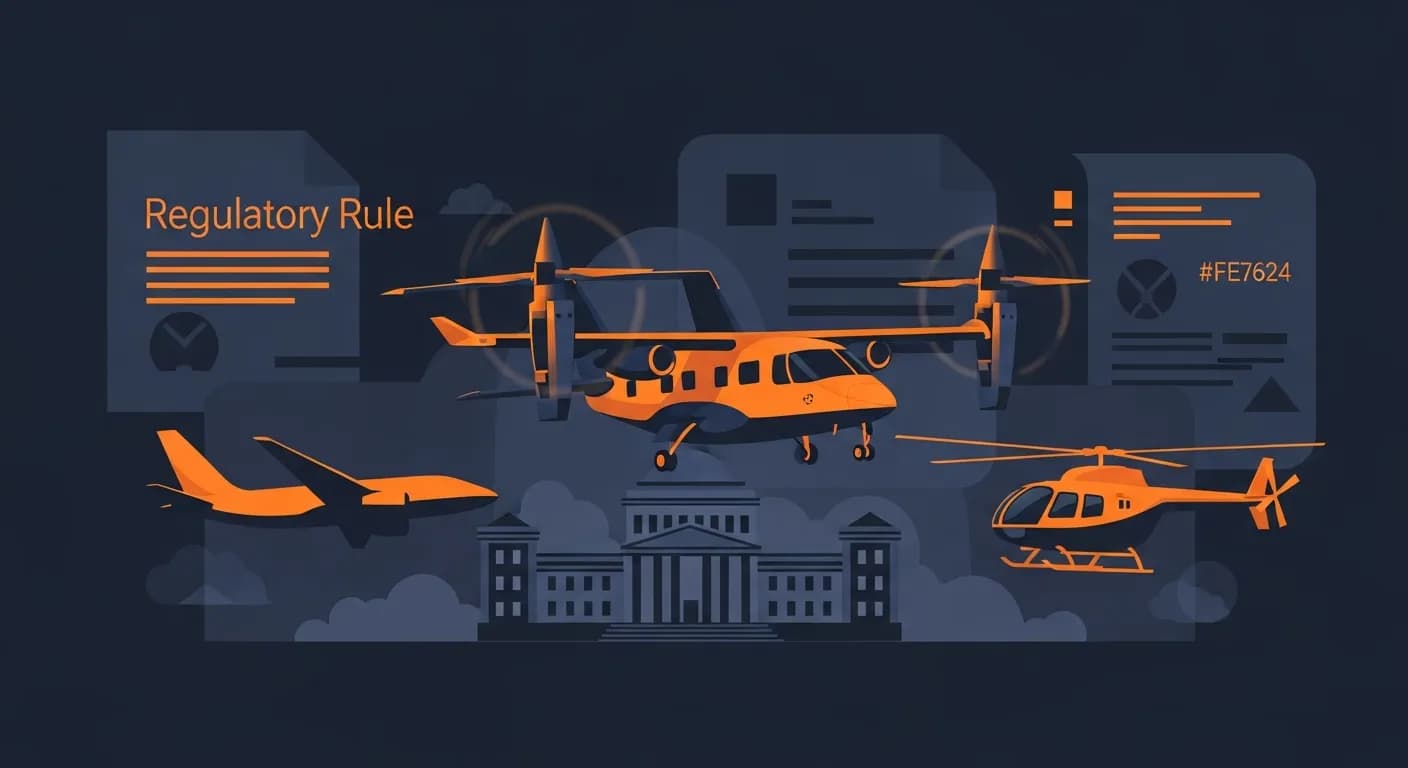
FAA Part 194 Explained: The New US Powered-Lift Rule That Lets eVTOL Pilots Train and Fly
FAA Part 194 is the new US Powered-Lift Operations rule that closes the last regulatory gap before commercial eVTOL passenger service. Here's what it covers, why it matters, and how it interacts with the eIPP program.
Joby Hits 1,000+ Test Flights Milestone as FAA TIA Testing Enters Final Phase
Joby Aviation has crossed 1,000 cumulative test flights and entered the final phase of FAA Type Inspection Authorization (TIA) testing. The milestones — combined with the completed Dubai vertiport — put Joby firmly on track for first revenue passenger service.

Archer Aviation Hits 100% FAA Means of Compliance: Abu Dhabi Q3 2026 Launch Accelerates
Archer Aviation has achieved 100% acceptance of its FAA Means of Compliance documentation — a critical certification milestone. Combined with its Abu Dhabi partnership and Stellantis manufacturing support, Archer is now racing toward Q3 2026 commercial service in the UAE.
Ready to explore the future of air travel?
Discover how eVTOL technology is revolutionizing urban mobility and plan your own aerial journey.