FAA eVTOL Integration Pilot Program: U.S. Air Taxi Flights Starting Summer 2026
Laxman Kafle

In this article (10)▼
March 2026 Update: Participant Selection Imminent
The eIPP program is entering its most critical phase. As of March 2026:
- Participant selection expected this month — The FAA is finalizing which cities and operators will participate in the first wave of US air taxi demonstration flights
- Operations begin within 90 days of selection — meaning the first American eVTOL flights could happen as early as June 2026
- Cargo operations may be permitted on a case-by-case basis, allowing selected operators to generate revenue during the demonstration phase
- Four major competitors are vying for spots: Joby Aviation, Archer Aviation, BETA Technologies, and Boeing's Wisk Aero
- Type Inspection Authorization (TIA) testing is the next critical FAA milestone — Joby, Archer, and BETA all believe they are nearing this phase, where FAA test pilots directly evaluate production aircraft
This update follows Archer's achievement of 100% FAA acceptance of Means of Compliance for its Midnight aircraft — making it the first eVTOL company to reach this regulatory milestone. Read more in our industry update.
The Federal Aviation Administration (FAA) and the Department of Transportation (DOT) have launched the eVTOL Integration Pilot Program (eIPP) — a structured initiative to bring air taxi demonstration flights to American cities starting summer 2026. The program represents the most concrete step yet toward commercial eVTOL operations in the United States.
While the initial flights will carry non-paying passengers (demonstration and evaluation flights rather than commercial service), the eIPP creates the regulatory framework, operational precedents, and public familiarity needed to transition to full commercial air taxi service.
What Is the eIPP?
The eVTOL Integration Pilot Program is designed to bridge the gap between aircraft certification and commercial operations. Even after an eVTOL receives its FAA type certificate, numerous operational questions must be resolved before commercial service can begin:
- How do eVTOLs integrate with existing air traffic control systems?
- What are the appropriate approach and departure procedures for urban vertiports?
- How do noise levels affect communities near flight paths?
- What ground infrastructure standards are needed for safe operations?
- How should emergency response procedures be structured for eVTOL incidents?
The eIPP addresses these questions through real-world flight operations in actual urban environments, generating data and experience that cannot be obtained through simulation or testing alone.
Program Structure
The eIPP operates under several key parameters:
Demonstration Flights: Aircraft will conduct flights carrying non-paying passengers — typically invited guests, government officials, media, and evaluation participants. These flights demonstrate the operational concept while regulators observe and collect data.
Participating Manufacturers: Joby Aviation and Archer Aviation are among the manufacturers participating in the eIPP. Both companies have aircraft in advanced stages of certification and have expressed intent to launch US commercial operations.
City Partnerships: The program targets specific metropolitan areas where eVTOL operations are most likely to launch commercially. Focus cities include:
- Los Angeles, CA — Massive metropolitan area with severe traffic congestion, existing heliport infrastructure, and headquarters proximity for both Joby and Archer
- New York City, NY — Dense urban environment with extreme ground transportation challenges, existing helicopter routes, and high willingness-to-pay passenger base
- Dallas, TX — Sprawling metropolitan area with significant distances between key destinations, strong aviation culture, and supportive local government
Duration: The program is expected to run through the certification and initial commercial launch period, providing continuous learning and adjustment opportunities.
Regulatory Foundation: The SFAR
The eIPP builds on the Special Federal Aviation Regulation (SFAR) published by the FAA in October 2024. This SFAR was a critical regulatory milestone that created operational rules for powered-lift aircraft (the category that includes eVTOLs) by combining elements of two existing regulatory frameworks:
Fixed-Wing Rules (Part 91/121/135): Operating procedures, airspace requirements, maintenance standards, and pilot qualifications from airplane regulations
Helicopter Rules (Part 91/135): Takeoff and landing procedures, heliport standards, and low-altitude operations rules from rotorcraft regulations
The SFAR's hybrid approach recognizes that eVTOLs are genuinely new — they take off and land like helicopters but fly like airplanes. Rather than forcing these aircraft into one existing category, the FAA created a framework that draws from both.
Key SFAR provisions relevant to the eIPP include:
- Pilot Qualifications: Requirements for powered-lift pilot ratings and training
- Operating Procedures: Rules for vertical takeoff/landing operations in urban environments
- Maintenance Standards: Inspection and maintenance requirements for electric propulsion systems
- Airspace Integration: Procedures for eVTOL operations within controlled airspace
Why Focus Cities Matter
The selection of Los Angeles, New York, and Dallas as focus cities is strategic:
Los Angeles offers perhaps the strongest initial use case for eVTOL in the United States. The city's geography — sprawling across 503 square miles with notoriously gridlocked highways — creates enormous time savings potential for aerial transportation. Key routes include:
- Downtown LA to LAX (30-60 min by car, 5-10 min by eVTOL)
- Santa Monica to Downtown (30-45 min by car, 5 min by eVTOL)
- Hollywood to LAX (45-90 min by car, 8 min by eVTOL)
Los Angeles also has an extensive network of existing heliports on commercial buildings that could serve as initial vertiport locations.
New York City represents the highest-value market due to population density, corporate travel demand, and the extreme cost of ground transportation delays. Manhattan to JFK airport takes 45-90 minutes by ground; an eVTOL could cover the distance in 7-10 minutes. The city already has helicopter shuttle services (BLADE), demonstrating willingness to pay for aerial urban transport.
Dallas is significant because of its sprawling geography (the DFW metroplex covers over 9,000 square miles), supportive local government, and existing aviation infrastructure. The DFW area is also home to significant corporate headquarters (American Airlines, AT&T, ExxonMobil) that represent high-value corporate travel customers.
Joby's eIPP Strategy
Joby Aviation is approaching the eIPP as a precursor to full commercial operations in the United States. The company's strategy includes:
- Demonstrating the S4's capabilities in real urban environments with FAA observers
- Testing operational procedures including vertiport turnaround times, passenger boarding, and air traffic control integration
- Building public awareness through high-profile demonstration flights
- Generating data that supports the transition from demonstration to commercial operations
- Training the first cohort of commercial pilots in operational urban environments
Joby's 850+ test flights in 2025 and its Dubai commercial launch preparation position the company to execute eIPP demonstrations efficiently.
Archer's eIPP Approach
Archer Aviation is similarly positioned for the eIPP, leveraging:
- 400+ test flights completed with the Midnight aircraft
- Georgia manufacturing facility producing six commercial aircraft
- Partnerships with United Airlines for network integration
- $6B+ order backlog demonstrating commercial demand
- Abu Dhabi operations providing international commercial experience
Archer has publicly stated its intent to launch commercial operations in Los Angeles, Miami, and New York, making the eIPP a natural stepping stone.
Impact on the US Air Taxi Timeline
The eIPP is expected to significantly accelerate the path to commercial eVTOL service in the United States:
Before eIPP: Manufacturers would need to complete certification, then separately negotiate operational approvals with cities and air traffic control authorities — a sequential process that could add years to the timeline.
With eIPP: Operational learning happens in parallel with certification. By the time type certificates are issued, regulators and cities already have real-world data on eVTOL operations, potentially enabling faster transition to commercial service.
The target timeline, assuming successful eIPP operations and timely certification:
- Summer 2026: eIPP demonstration flights begin in focus cities
- Late 2026 / Early 2027: First FAA type certificate for an eVTOL aircraft
- 2027: Initial commercial operations under Part 135 (on-demand air taxi) certificates
- 2028-2029: Route expansion, additional cities, fleet scaling
What the Flights Will Look Like
eIPP demonstration flights will give Americans their first real glimpse of air taxi operations. Expect to see:
- S4 and Midnight aircraft operating from designated vertiport locations in city centers
- Short-duration flights (10-20 minutes) covering typical urban routes
- Media and VIP passengers for initial demonstrations, followed by broader public access
- FAA and DOT officials observing and evaluating operations
- Community engagement sessions in neighborhoods near flight paths to address noise and safety questions
Staying Informed
The eIPP marks the beginning of America's air taxi era. While commercial ticketed flights are still months away, the demonstration program brings the reality of urban air mobility to US cities for the first time.
Follow the progress of participating companies on our companies page. Understand the regulatory framework shaping US eVTOL operations. Monitor eVTOL stock performance for Joby (JOBY) and Archer (ACHR). Explore when air taxis will be available in your city. And join the waitlist to secure your place as one of the first commercial air taxi passengers in the United States.
Sources: Information sourced from official company announcements, FAA publications, SEC filings, and verified industry reports. For corrections, contact us.
Written by
Laxman Kafle
Founder of eVTOL.Travel — building the independent global directory and verified pre-reservation platform for the urban air mobility era. Tracking every operator, vertiport, and city launch toward 2026.
Continue reading
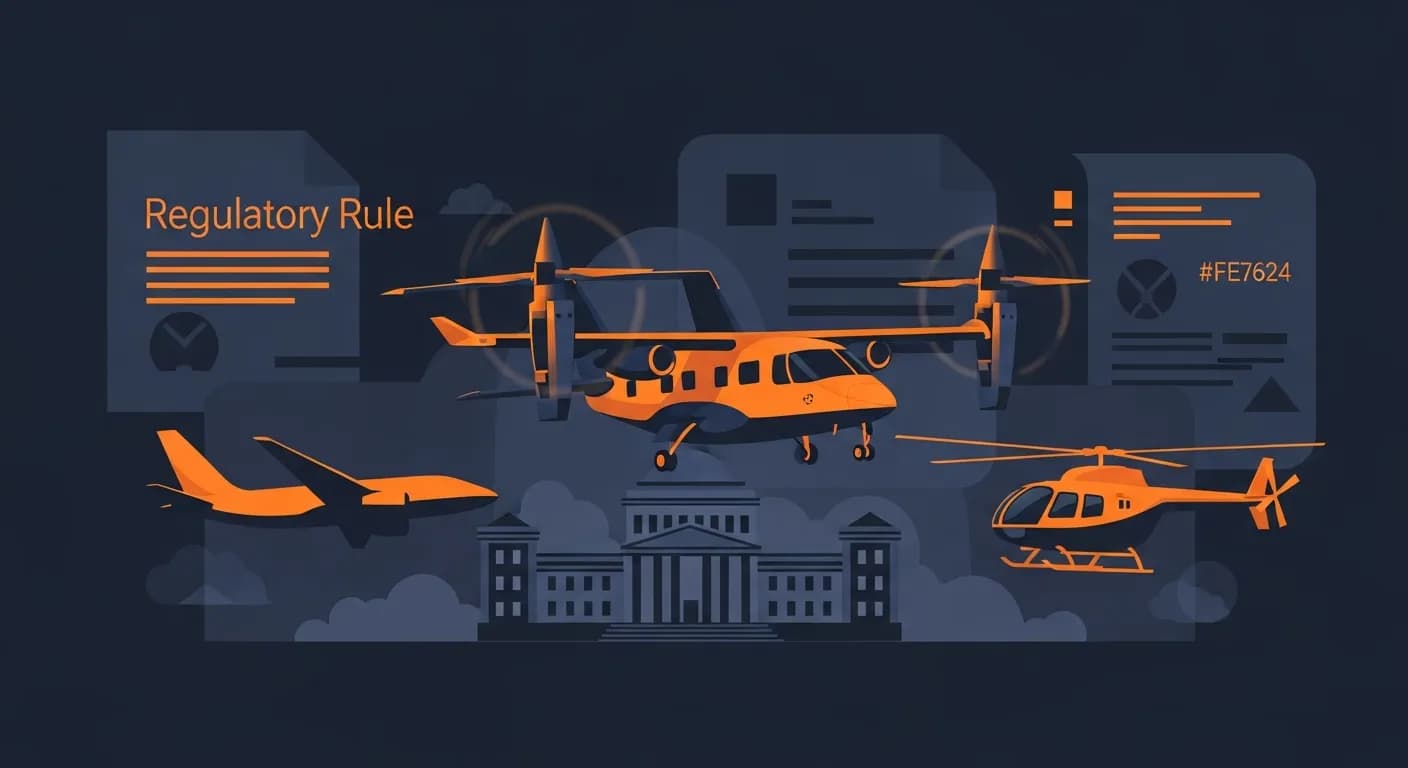
FAA Part 194 Explained: The New US Powered-Lift Rule That Lets eVTOL Pilots Train and Fly
FAA Part 194 is the new US Powered-Lift Operations rule that closes the last regulatory gap before commercial eVTOL passenger service. Here's what it covers, why it matters, and how it interacts with the eIPP program.
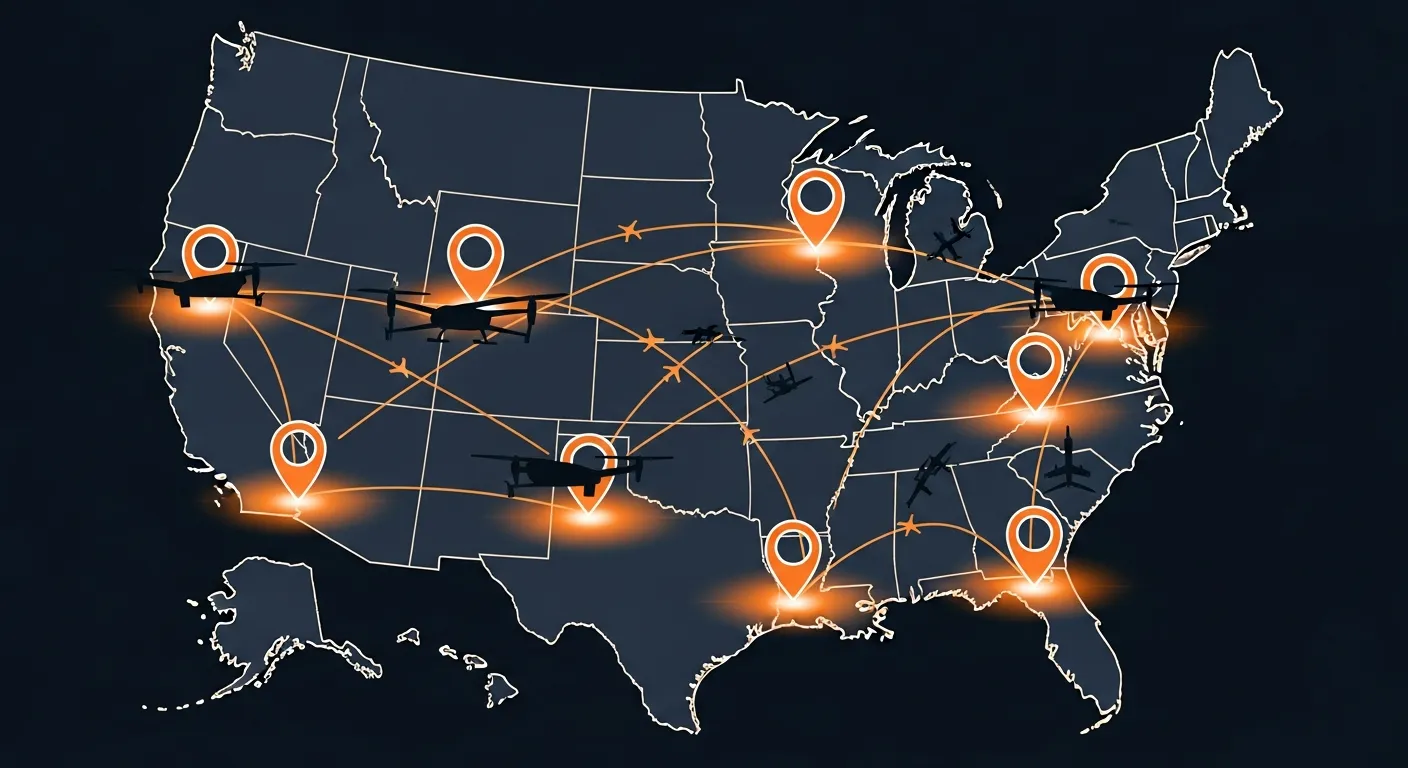
FAA Selects 8 eIPP Projects Across 26 States: US Air Taxi Demo Flights Coming Summer 2026
The FAA announced its Electric Innovative Propulsion Program (eIPP) selections on March 9, 2026, choosing 8 demonstration projects spanning 26 states. Joby Aviation, Archer Aviation, BETA Technologies, and Wisk Aero are among the participants, with demo flights beginning as early as summer 2026.

White House Signs eVTOL Integration Pilot Program — Six US Cities Named
On March 9, 2026, the White House signed the eVTOL Integration Pilot Program (eIPP) into formal acceleration. Six US cities were named in the first eIPP cohort, with FAA, Department of Transportation, and state governments coordinating to fast-track commercial air taxi operations.
Ready to explore the future of air travel?
Discover how eVTOL technology is revolutionizing urban mobility and plan your own aerial journey.