BETA Technologies + Surf Air Launch Hawaii Inter-Island Electric Air Service
Laxman Kafle
In this article (8)▼
Hawaii is becoming an unlikely flagship market for US electric aviation. BETA Technologies and Surf Air Mobility have committed to inter-island service using BETA's ALIA electric aircraft, targeting cargo operations in 2026 and passenger service in 2027.
Why Hawaii Is the Perfect Launch Market
Hawaii's geography makes it the highest-value US electric aviation market that isn't a major mainland metro:
- Short routes. Inter-island flights are 100–200 miles — well within ALIA's 250+ mile range.
- High passenger volume. Hawaii's tourism economy generates massive inter-island travel demand.
- Expensive existing service. Turboprop inter-island flights are $100–$300 per leg today.
- Environmental priority. Hawaii has aggressive renewable energy mandates that align with electric aviation.
- Limited competition. Hawaiian Airlines and Mokulele dominate, leaving room for premium electric service.
The ALIA Aircraft
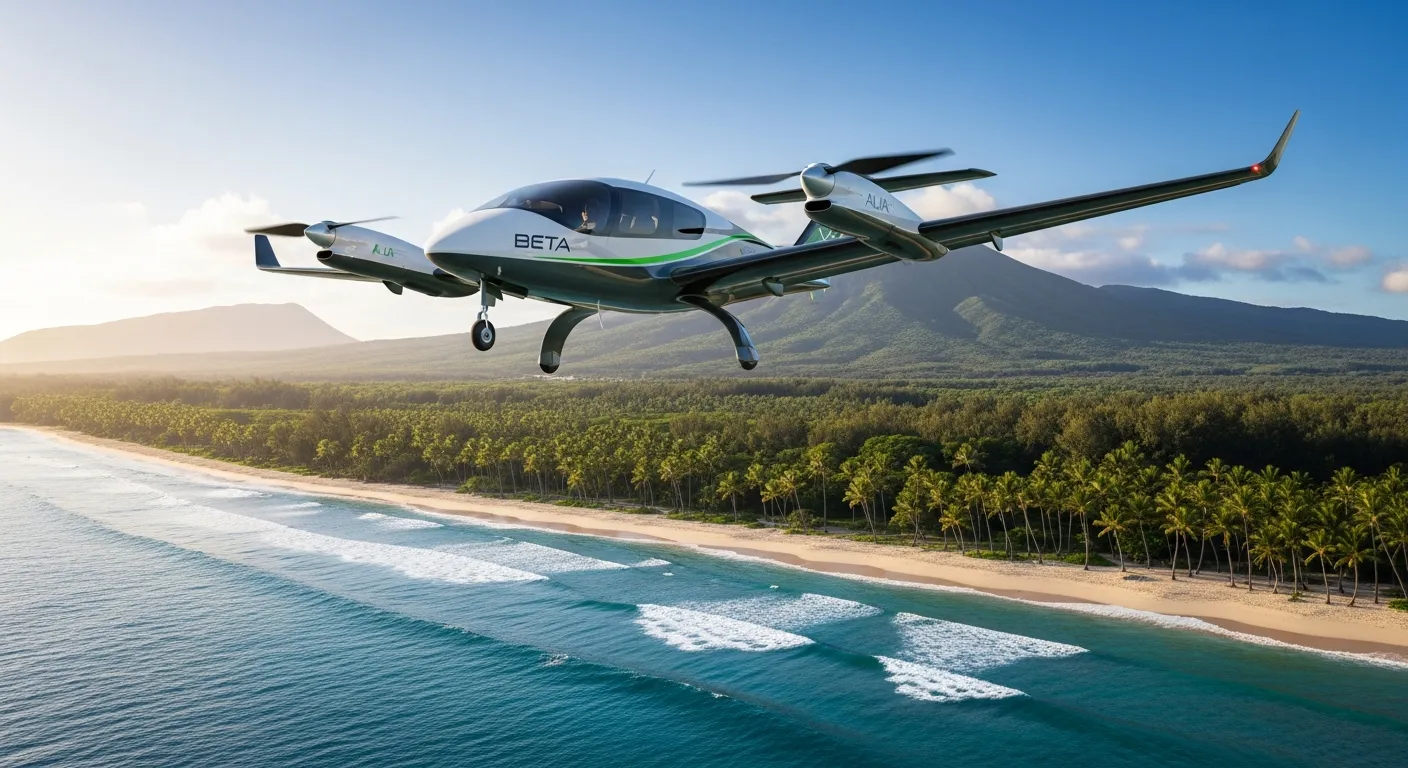
BETA's ALIA is a fixed-wing electric aircraft — not a multirotor eVTOL. That's important: ALIA gets longer range and higher cruise speeds (170 mph) by trading vertical takeoff for short conventional runway operation. Hawaii's existing inter-island airports (Lihue, Kahului, Kona, Hilo, Honolulu) all have runways suitable for ALIA.
The aircraft carries up to 5 passengers + 1 pilot in the passenger configuration, or substantial cargo in the freight configuration. BETA also operates ALIA in cargo service for UPS on the US mainland.
The Launch Sequence
The Hawaii launch sequence:
- 2026 — Cargo. Inter-island cargo runs replace turboprop freight legs. Lower regulatory risk, easier route economics.
- 2026–2027 — Passenger trials. Limited passenger flights on existing routes.
- 2027 — Public passenger service. Full inter-island passenger schedules.
Why Hawaii Matters Beyond Hawaii
Hawaii is a proving ground. If BETA + Surf Air can run profitable electric inter-island service, the model is exportable to:
- Caribbean inter-island (St. Maarten, BVI, USVI)
- Greek islands
- Indonesian inter-island
- Japanese inter-island (Okinawa cluster)
- Philippines inter-island
The Hawaii launch isn't just about Hawaii — it's about whether short-hop electric aviation works as a category.
How This Differs from Joby and Archer
| Factor | Joby / Archer | BETA + Surf Air Hawaii |
|---|---|---|
| Aircraft type | Multirotor eVTOL | Fixed-wing electric |
| Routes | Urban airport-to-city | Inter-island regional |
| Range | 100–150 miles | 250+ miles |
| Vertiports needed | Yes | No (existing airports) |
| Launch timeline | 2026–2028 | Cargo 2026, passenger 2027 |
Both models are valuable. The future US electric aviation market includes both — urban multirotor air taxis for city corridors, and fixed-wing electric for regional inter-island and short-hop service.
How to Stay Ahead
Track BETA Technologies and other eVTOL companies. For airline-style flight booking when service launches, join the waitlist.
Key statistics
- 6 main Hawaiian Islands targeted by the BETA + Surf Air inter-island plan (Oahu, Maui, Big Island, Kauai, Molokai, Lanai).
- ~250+ mile design range for BETA's ALIA CTOL — long enough for any inter-island Hawaiian leg without a recharge stop.
- 2026 target year for cargo-first service; 2027 for scheduled inter-island passenger service.
- Existing infrastructure: BETA + Surf Air avoid new vertiports — they use the existing FAA-certified Hawaii airport network (HNL, OGG, KOA, LIH, MKK, LNY).
- 0 jet fuel: All-electric flight removes both the fuel cost and the inter-island carbon footprint per passenger.
Industry perspective
As of April 30, 2026.
The Hawaii inter-island market — short legs between HNL ↔ OGG ↔ KOA ↔ LIH ↔ MKK ↔ LNY, existing FAA-certified airport infrastructure, no need for new vertiports, and a high-density commuter and visitor-air-travel profile — is one of the highest-density short-haul electric-aviation opportunities in the United States. Surf Air Mobility (the publicly-listed parent of Mokulele Airlines) is the natural launch operator, and the BETA ALIA-250 / CX300 is the platform that fits the leg distances.
"Hawaii is the cleanest electric-aviation thesis in the United States. The legs are short, the airports are already there, the regulator is the same FAA, and the market literally cannot drive between islands. BETA + Surf Air don't have to invent vertiports — they just have to electrify the inter-island schedule that already exists. That's a faster commercial path than any new urban corridor." — Laxman Kafle, Founder, eVTOL.Travel (April 30, 2026)
Sources: Surf Air Mobility — SEC filings; BETA Technologies — Newsroom; Hawaii DOT — Airports Division. Editorial interpretation by eVTOL.Travel.
Sources: Information sourced from official company announcements, FAA publications, SEC filings, and verified industry reports. For corrections, contact us.
Written by
Laxman Kafle
Founder of eVTOL.Travel — building the independent global directory and verified pre-reservation platform for the urban air mobility era. Tracking every operator, vertiport, and city launch toward 2026.
Continue reading
eVTOL News July 2026: Joby's Toyota JV and Virgin Atlantic Deal, Vertical Slips to 2029, and the World Cup Verdict
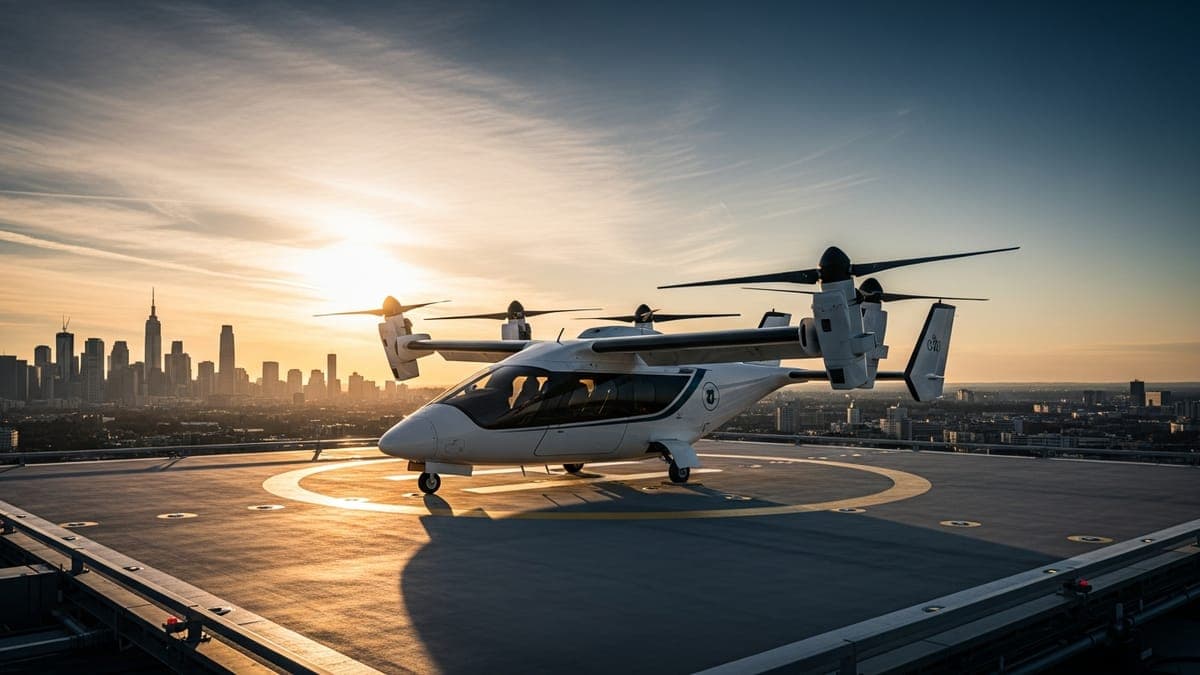
July 2026 was the month the eVTOL industry's post-type-certificate era took shape. Joby — fresh off its June FAA type certificate — formed a manufacturing joint venture with Toyota and signed an exclusive UK partnership with Virgin Atlantic covering London and Manchester. Vertical Aerospace pushed VX4 certification from 2028 to 2029. BETA flew the first organ-transport relay under the FAA's eVTOL Integration Pilot Program. And the World Cup closed with the verdict we projected in April: zero commercial eVTOL flights in all 16 host cities. Here's the full roundup.
FAA Selects 8 eIPP Projects Across 26 States: US Air Taxi Demo Flights Coming Summer 2026
The FAA announced its Electric Innovative Propulsion Program (eIPP) selections on March 9, 2026, choosing 8 demonstration projects spanning 26 states. Joby Aviation, Archer Aviation, BETA Technologies, and Wisk Aero are among the participants, with demo flights beginning as early as summer 2026.

BETA Technologies: From Vermont Startup to $7.4 Billion Public Company
BETA Technologies went public in November 2025 at a $7.4 billion valuation, raising $1 billion in the largest eVTOL IPO ever. With a $3.5 billion order backlog from Amazon, UPS, and others, BETA is proving that institutional investors believe in electric aviation.
Ready to explore the future of air travel?
Discover how eVTOL technology is revolutionizing urban mobility and plan your own aerial journey.